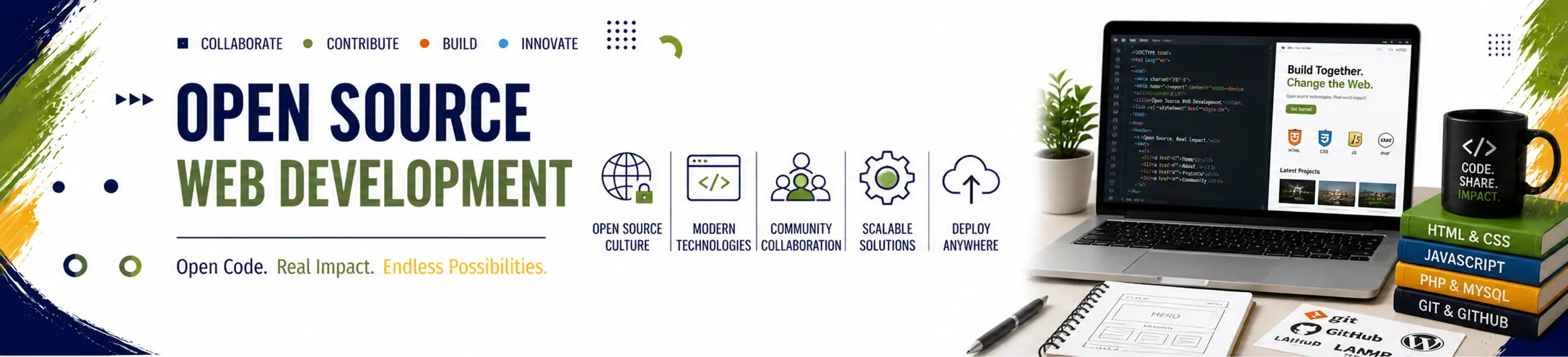
PROGRAM DESCRIPTION
This diploma program focuses on preparing students to work as a programmer specializing in open-source tools, placing them at the core of the digital revolution era and creating a network effect of flexibility and affordability for companies that expect to create a customized customer experience.
This program will give students theoretical and practical skills in Content Management Systems, Perl and Python, and Ruby on Rails. Open Source Web Development Diploma has an optional co-op component that can be taken after the completion of the academic year.
The two options are:
- Open source web development Diploma
- Open source web development Diploma with Co-op
LEARNING OBJECTIVES
Upon completion of this program, the successful student will have reliably demonstrated the ability to apply theoretical and practical skills in Content Management Systems, Perl and Python, and Ruby on Rails.
ADMISSION REQUIREMENTS
- Grade 12 graduate or mature student status (British Columbia 19 years or older)
- Meet minimum English language proficiency requirements
CAREER OPTIONS
Upon successful completion, graduates will be able to secure employment in a wide variety and sizes of businesses such as:
- Open-source application programmer
- Programmer Analyst
- Software Developer
- Web programmer
- Web developer
Co-Op
The co-op will provide students with the opportunity to apply acquired theory and skills in a practical business setting. Students will gain real-world experience working on projects as a member of a team with project deliverables and deadlines.
Program Organization
| Course No. | Course Name | Hours |
|---|---|---|
| ICR100 | Information Technology Essentials | 40 |
| ICR110 | Problem solving and analytical thinking | 40 |
| ICR120 | Markup Essentials | 60 |
| ICR130 | Scripting for Web Development | 60 |
| ICR140 | Databases Design and Modeling | 40 |
| GRD110 | Digital Imaging I | 40 |
| IOW200 | Content Management System | 120 |
| IOW210 | Scripting Frameworks and Libraries | 80 |
| ITN400 | Markup and Data Serialization | 40 |
| IOW300 | Full Stack Web framework | 200 |
| IGP330 | Open Source Scripting | 60 |
| IGP420 | Portable Programming | 120 |
| IOW400 | Backend Web Development | 60 |
| CAP200 | Co-op Prep. Workshop | 80 |
| Co-op | 960 |
Admission Requirements
- Grade 12 Graduate or a mature student
- Meet the Language proficiency requirements as listed below:
Prior to acceptance applicants must meet at least one of the following language proficiency requirements:
- Provide verified results for one of the English language proficiency tests listed below.
- International English Language Testing System (IELTS) Academic: overall score of 5.5 or higher.
- Test of English as a Foreign Language (TOEFL) IBT: overall score of 46 or higher
- Canadian Academic English Language (CAEL) Test: overall score of 40 or higher
- Canadian English Language Proficiency Index Program (CELPIP): Listening 6, Speaking 6, Reading 5, and Writing 5
- Duolingo English Test: overall score of 95 or higher
- Pearson Test of English (PTE) Academic: overall score of 43 or higher
- Cambridge English Qualifications: B2 First exam (FCE): overall score of 160 /"C" or higher
- Cambridge Linguaskill: overall: B2 level or higher
- LANGUAGECERT Academic: B2 level or higher
- The Michigan English Test (MET): B2 level or higher
- iTEP Academic: overall score of 3.5 or higher
- EIKEN: placement of Grade Pre-1 or higher
Test results must be dated no more than two years before the start date of the program.
Mature student applicants:
- Completion of 3 years of full-time secondary education (Grades 8-12) or 2 years of secondary education (including English 10 and 11 with a grade of 'C' or higher) from a country where English is one of the principal languages(This may be demonstrated by providing a high school transcript, completion of a BC Adult Graduation program or providing international education credentials recognized through WES, ICES, or IQAS.), or
- Completion of 2 years of full-time post-secondary education at an accredited institution where English is the language of instruction (Language development courses (i.e., ELL courses) cannot be included in this calculation), or
- Evidence that a language standard defined and accepted by a third-party regulator has been met. This may include minimum language standards or testing options set by a third-party regulator (e.g., Health Colleges, Public Registries, Transport Canada, etc.).
- Applicant is 19 years or older at the start of the program and is a Canadian citizen or permanent resident who cannot access is their educational records or provide sufficient evidence of secondary or post-secondary education as outlined above:
- Reading: 235
- Writing: 235
- WritePlacer: 4
Language development courses (i.e., ELL courses) cannot be included in this calculation. Accuplacer may not be used to demonstrate that a student meets an admission requirement other than language proficiency. For example, Accuplacer may not be used to demonstrate that a student meets a Math 11 admission requirement.
ICR100 Information Technology Essentials
This is an introductory course to the basics of computer hardware, especially those components that are used frequently by programmers including RAM and CPU. Students will also be introduced to operating systems.
ICR110 Problem Solving and Analytical Thinking
Understanding the language, grammar and syntax of a programming language is key to solving programming problems. This course introduces programming logic and theory without focusing on a specific language. Students will solve problems using pseudo-code.
ICR120 Markup Essentials
Students will construct simple web pages using HTML and JavaScript while learning programming principles and best practices. Interactive functionality will be added to enhance web pages.
ICR130 Scripting for Web Development
Students will learn how to create essential components of modern websites using HTML, CSS, and JavaScript in a commercial context.
ICR140 Databases Design and Modeling
Introduction to database design, development methodologies, and database systems such as Microsoft Access and Classic ASP.
GRD110 Digital Imaging I
Introduction to industry-standard digital imaging software such as Photoshop, including editing tools and techniques.
IOW200 Content Management Systems
Students will explore CMS platforms such as WordPress, Joomla, and Moodle to create dynamic and flexible websites. Topics include database management, templates, and content publishing.
IOW210 Scripting Frameworks and Libraries
Focus on Ajax and JavaScript frameworks to build dynamic web applications and handle server communication efficiently.
ITN400 Markup and Data Serialization
Students will learn XML for data storage and transfer, including creating and extracting structured data across systems.
IOW300 Full Stack Web Framework
Introduction to Ruby on Rails for building full web applications, focusing on structure, development workflow, and real-world implementation.
IGP330 Open Source Scripting
Students will learn PHP and MySQL to build dynamic websites and understand open-source web development tools.
IGP420 Portable Programming
Advanced Java programming including object-oriented concepts such as inheritance and polymorphism.
IOW400 Backend Web Development
Focus on backend programming using Python and Perl, including database integration and server-side logic.
CAP200 Co-op Preparation Workshop
Prepares students for employment by developing communication skills, workplace readiness, and job search strategies.
Graduation Requirements
- Successful completion of all program courses
- Successful completion of program Co-op (If applicable)
Program Duration
| Program | Hours |
|---|---|
| Total instructional hours | 960 (No Co-op) - 040 (With Co-op) |
| Total Co-op hours | 960 (if applicable) |
| Total program hours | 960 (No Co-op) - 2000 (With Co-op) |
| Total program length (weeks) | 48 (No Co-op) - 96 (With Co-op) |
Delivery Method
This program can be delivered in different methods,
-
On Site
The program will be delivered 100% in person*
Courses may be offered in a different order as long as prerequisites are met. Prerequisites are indicated in each course outline.
-
Distance
The program will be delivered 100% in an asynchronous** style except for the integrated work experience i.e practicum or co-op
Content of courses may be available at the same time OR in a different order as long as prerequisites are met. Prerequisites are indicated in each course outline.
-
Combined (Hybrid)
In this method, 50% of EACH COURSE of the program is delivered in person and the other 35% to 50% percent is delivered in synchronous** style and 0 to 15% in asynchronous*** style.
NOTE:
In this method, EVERY course of the program is delivered both in class and online. Courses may be offered in a different order as long as prerequisites are met.
Prerequisites are indicated in each course outline.
Students may ask SEA in writing if they want to take different percentages in class or online. Upon SEA’s approval, an amendment to the enrollment agreement must be signed.
*In person – means all classes of all courses are conducted on campus and students and instructors are on the same schedule and in the same physical location.
**Synchronous is when students and instructors are on the same schedule but can log in to a virtual class at the same time, only from different physical locations.
***Asynchronous is when students are on their own schedule and log in to the school management system at their own time, submit assignments on their own schedule and within a specific timeframe and are in touch with instructors via email and not necessarily at the same time and/or time zone.